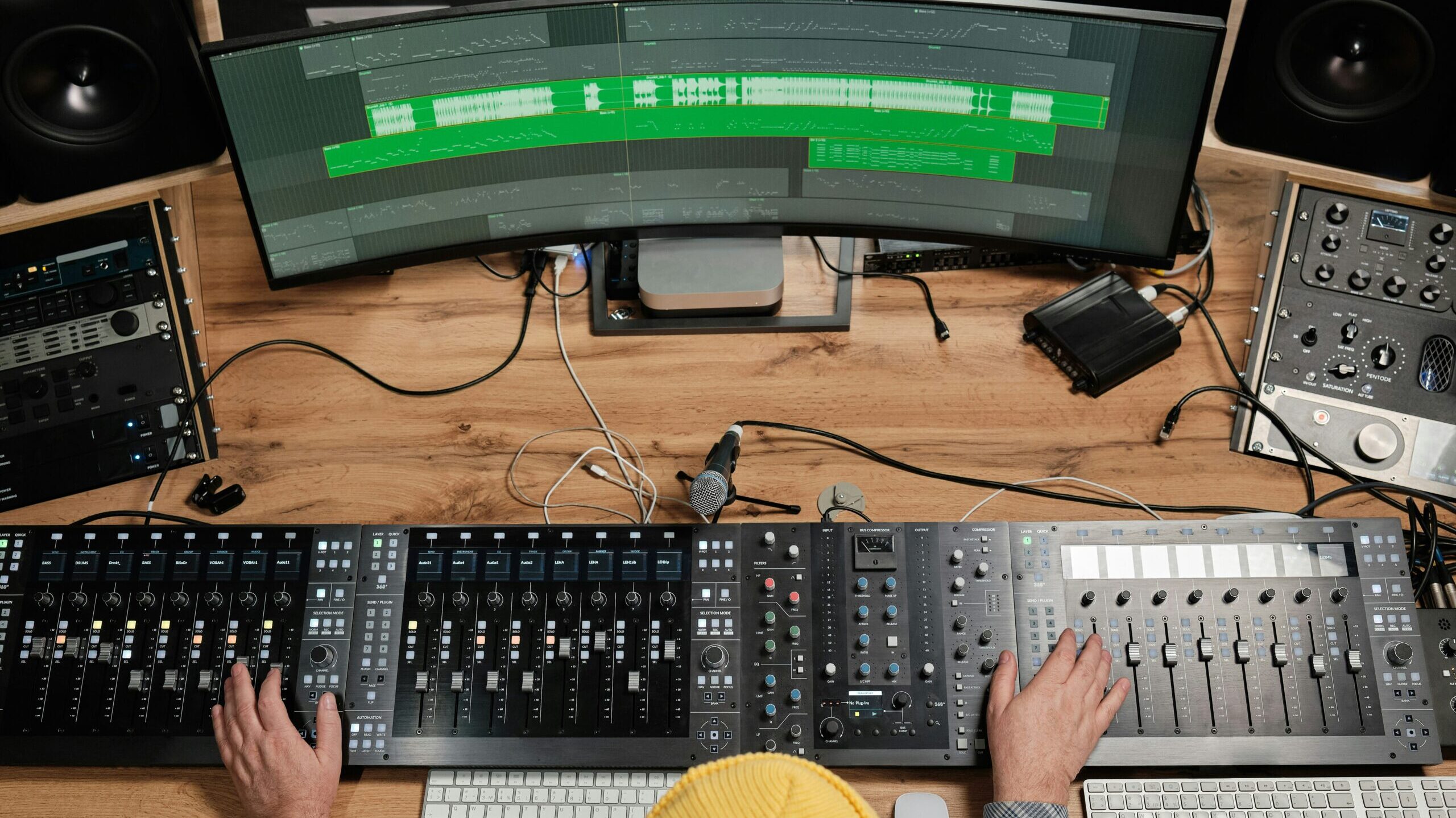
Live performance logistics determine whether an artistic plan becomes a deliverable event. Early Music and chamber music coordination increase complexity because HIP requirements, specialist instruments, and limited rehearsal availability add dependencies that standard production templates frequently miss.
The Codetta Collective LLC operates as a One-Stop Hub of Services for musicians and institutions that need professional Music Project Management, production coordination, and operational discipline. The objective is consistent: protect artistic standards while reducing schedule risk, budget variance, and reputational exposure.
The seven mistakes below represent recurring failure points in music project logistics. Each section provides an operational definition of the problem and a service-grade standard for resolving it.
SUBSCRIBE TO OUR NEWSLETTER


Mistake #1: Treating Budgeting As A Rough Estimate
Replace Optimism With Line-Item Controls And Cash-Flow Discipline
Budgeting fails when it is treated as a single total number rather than an operating system. A project can be “profitable” on paper and still collapse due to timing mismatches between deposits, payroll, and ticket revenue. This is a common issue for ensembles producing Early Music events with specialized rentals, travel, and rehearsal space costs.
Professional Music Project Management uses a line-item model and a cash-flow schedule.
Operational risks created by informal budgeting:
- Deposits due before revenue is collected
- Underestimated venue fees, staffing, insurance, and equipment rentals
- Overtime and additional rehearsal costs not accounted for
- Marketing and design costs deferred until late stage, then paid at premium rates
Professional standard for budgeting and finance controls:
- Line-item budget with documented assumptions and vendor quotes
- Payment calendar aligned with contract terms and expected revenue timing
- Contingency reserves sized to realistic risk categories (substitutions, shipping, overtime)
- Variance tracking updated as invoices arrive, not after the performance

For HIP projects, budgeting should explicitly cover instrument handling, tuning standards, and any rehearsal environment requirements that protect instruments and support consistent musical outcomes.
Mistake #2: Treating Delegation As Optional
Assign Owners, Deadlines, And Approval Paths Before Work Starts
Delegation fails when tasks are “shared” but not owned. Informal hand-offs create bottlenecks, duplicated work, and last-minute decisions that compromise execution. This pattern is typical when an artistic director also manages contracting, marketing, stage management, and donor communication.
A One-Stop Hub model reduces the operational burden on artistic leadership by consolidating execution responsibilities under a single accountable team. When delegation is structured, the ensemble retains artistic control while eliminating administrative overload.
Operational risks created by weak delegation:
- Delayed contracts and incomplete paperwork
- Unreviewed marketing assets and inconsistent branding
- Missed technical requirements because no one owns venue coordination
- Incomplete program materials and late print orders
Professional standard for task ownership:
- Responsibility matrix for contracting, marketing, production, and front-of-house
- Communication cadence with defined decision points
- Approval workflow for final assets (program, press release, tech plan, run-of-show)
- Centralized document collection: W-9s, invoices, bios, headshots, and releases
For additional context on why dedicated operational leadership matters for Early Music, see:
Mistake #3: Booking A Venue Without Verifying Venue Technical Riders
Validate Technical Compatibility Before Signing Or Paying Deposits
Venue selection is a technical decision as much as a scheduling decision. Problems often surface after the contract is signed: insufficient access for a harpsichord, inadequate climate control, restrictive load-in windows, or missing infrastructure for recording.
Venue technical riders exist to prevent these issues. They must be reviewed early, negotiated as needed, and reflected in the project’s production documentation.
Operational risks created by skipping technical verification:
- Load-in constraints that add labor cost and performance-day stress
- Insufficient backstage space, storage, or dressing room access
- Missing power access, lighting capability, or time allocated for sound check
- Contractual conflict between venue policies and project needs
Professional standard for venue technical alignment:
- Written venue technical riders reviewed and confirmed in advance
- Stage plot, access plan, and production schedule attached to internal run-of-show
- Documentation of instrument logistics and any HIP requirements (pitch standards, setup time)
- Clear responsibility allocation for front-of-house, stage management, and venue liaison

If HIP repertoire is involved, the venue assessment should also address ambient noise, HVAC behavior, and rehearsal availability in the space.
Mistake #4: Building Rehearsal Scheduling Around Availability Instead Of Outcomes
Engineer Rehearsals To Support Musical Integration And Delivery Readiness
Rehearsal scheduling is frequently treated as a calendar exercise. In reality, it is a production design task. HIP performance practice, unfamiliar editions, and specialist instrumentation can require a different rehearsal architecture than a standard chamber concert.
A functional rehearsal plan is built backward from performance objectives and includes buffer time for known friction points such as continuo coordination and staging transitions.
Operational risks created by unstructured scheduling:
- Excessive time spent on logistics during rehearsal
- Rehearsal clustering that increases fatigue and reduces musical retention
- No dedicated time for run-throughs, page turns, or on-site acoustic adaptation
- Final rehearsal compromised by unresolved production details
Professional standard for rehearsal architecture:
- Master schedule with rehearsal objectives per session (reading, integration, polish)
- Documented dependencies: parts readiness, venue access, and instrument logistics
- Call sheets with start/stop times, location details, and contact chain
- Clear rehearsal deliverables: tempos, instrumentation, continuo approach, and stage plan
HIP projects benefit when technical preparation reduces rehearsal waste. This is where editorial readiness and Basso Continuo Figuring can materially improve efficiency.
Mistake #5: Launching Marketing Too Late To Influence Demand
Use Audience Development Analytics And A Sales Timeline, Not Panic Posting
Marketing timing is a logistics decision because it affects cash flow, staffing commitments, and sponsor confidence. Late launches force aggressive discounting, reduce forecasting accuracy, and increase operational stress during the final week.
Live Music Promotion performs best when it is scheduled as a workflow with measurable milestones. Audience development analytics provide the evidence needed to set realistic targets and adjust messaging before sales stall.
Operational risks created by late marketing:
- Slow ticket velocity and unpredictable revenue
- Reduced leverage for partnership promotion and press outreach
- Poor audience segmentation and generic messaging
- Missed lead time for email campaigns and content approvals
Professional standard for promotion timing and analytics:
- Sales timeline with launch date, milestone targets, and content deliverables
- Audience development analytics: segmentation, conversion tracking, and trend reporting
- Integrated asset plan: email, social, partner toolkits, and press materials
- Post-event reporting to improve the next cycle

Industry resources such as Prism.fm illustrate how professional teams treat promotion as an operational system rather than a last-minute activity. For broader training and industry context, ICMP London provides education pathways that reinforce professional standards in music business operations.
Mistake #6: Allowing Scope Creep To Expand Without Change Control
Convert New Ideas Into Documented Decisions With Cost And Timeline Impact
Scope creep typically appears as “small” additions: a pre-concert talk, a livestream, extra repertoire, or additional musicians. Each addition creates downstream tasks across contracting, marketing, production scheduling, and venue coordination.
Scope creep becomes a logistics failure when it expands the workload without adjusting budget, timeline, staffing, and approvals.
Operational risks created by unmanaged scope:
- Unfunded cost increases and late vendor bookings
- Program reprints, revised tech plans, and delayed marketing approvals
- Increased rehearsal demands without schedule changes
- Confusion about roles, responsibilities, and event timing
Professional standard for scope management:
- Change control process: define change, assess impact, approve, then schedule
- Updated budget and run-of-show reflecting the change
- Revised marketing deliverables and audience messaging if program changes
- Contract updates when deliverables or personnel change
This discipline preserves quality without reducing creative ambition.
Mistake #7: Assuming Audience Experience Is Separate From Logistics
Treat Patron Operations As A Core Deliverable, Not A Secondary Detail
Audience experience is shaped by operational details: ticketing clarity, accessibility information, start times, front-of-house readiness, program accuracy, and post-event communication. These factors influence repeat attendance, presenter confidence, and sponsor perception. They also drive measurable growth when paired with audience development analytics.
Operational risks created by weak audience operations:
- Confusing entry and seating procedures
- Delayed house opening and inconsistent start times
- Program errors, missing credits, and inaccurate artist information
- Inadequate accessibility guidance and unclear parking or transit instructions
Professional standard for audience experience execution:
- Patron communications plan: confirmation emails, arrival guidance, and accessibility notes
- Front-of-house staffing plan and check-in procedures
- Program quality control process with final proofing and version management
- Post-event follow-up for audience retention: surveys, thank-you messages, and future offers
Audience experience is also a brand system. When it is controlled, it strengthens audience trust and improves long-term viability for Early Music presenters and chamber music organizations.
Related Internal Reading
Additional Codetta Collective Resources For Operational Leaders
Operational excellence in Early Music is cumulative. The following internal references support deeper planning and organizational positioning:
- Why Your Early Music Ensemble Needs a Project Manager (and Not Just a Conductor)
- Supporting Artistic Excellence: Welcoming Elettaria to The Codetta Collective
Summary: A Service-Grade Standard For Music Project Logistics
Convert Seven Recurring Mistakes Into Repeatable Systems
The seven mistakes outlined above are consistent across genres, but they intensify in HIP contexts where technical requirements and specialist workflows are less forgiving. A One-Stop Hub approach replaces informal coordination with documented systems across budgeting, delegation, venue technical riders, rehearsal scheduling, marketing timing, scope control, and audience experience.
Basso Continuo Figuring, when required, supports rehearsal efficiency and stylistic clarity by reducing ambiguity and improving preparation quality. Audience development analytics provide the measurement layer that turns Live Music Promotion into a repeatable growth function.
For service coordination and availability, refer to: