There’s a persistent myth in the early music world that historically informed performance is impossible without period instruments. Directors of opera productions turn down Baroque projects because their ensemble plays modern violins. String players assume they can’t approach Bach authentically without tuned down a half step, aka A=415. But this assumption fundamentally misunderstands what historically informed performance actually means.
The reality is far more liberating: historically informed performance is about style, articulation, and musical understanding: not exclusively about the instruments themselves. Modern orchestras and chamber ensembles have increasingly demonstrated that with proper technique and guidance, contemporary instruments can achieve remarkably authentic interpretations of Baroque and Classical repertoire. The key lies in understanding the specific performance practices that defined these periods and adapting your approach accordingly.
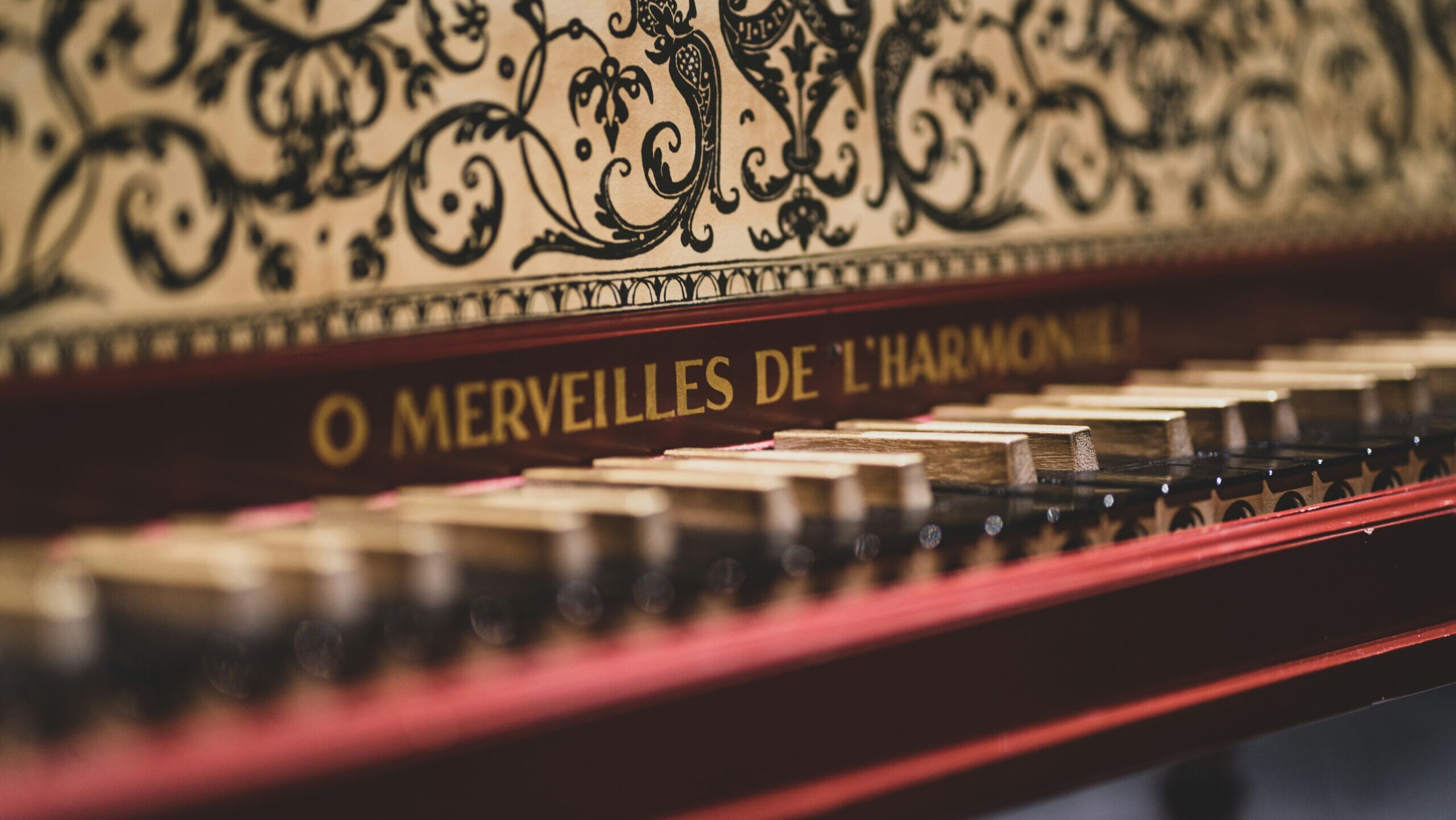
This becomes especially achievable when you have access to a harpsichord and expert basso continuo realization. The harpsichord serves as both the rhythmic and harmonic anchor of Baroque ensemble music, and when combined with informed string and wind technique on modern instruments, the results can be both historically grounded and artistically compelling. Here’s how to make it work.
SUBSCRIBE TO OUR NEWSLETTER


Understanding the Historically Informed Performance Philosophy
Historically informed performance isn’t about rigid authenticity or puritanical adherence to dogma. As conductor Fabio Biondi has noted, “Everything is a compromise”: even in the 18th century, instruments varied wildly by region, maker, and time period. What matters is capturing the musical intent and stylistic conventions of the era.
The evolution of the early music movement itself reflects this pragmatism. The 1970s and 80s saw an almost fundamentalist approach to period performance, but contemporary practice has matured into something more flexible and nuanced. Today’s approach focuses on understanding why composers made certain choices and how those decisions should inform your interpretation, regardless of whether you’re playing on a modern Steinway or an 18th-century fortepiano.
For modern ensembles, this means developing what conductor Nicholas McGegan calls “a chameleon-like ability” to adjust your sound to different periods. This adaptability is increasingly part of conservatory training, making younger musicians more equipped to navigate these stylistic shifts than previous generations.
Articulation and Bowing: Speaking Through Your Instrument
The most immediately noticeable difference between Baroque and Romantic playing lies in articulation. Baroque music demands a speech-like quality: each note should have a clear beginning and ending, creating what period players call “articulated sound” rather than the continuous legato lines favored in later repertoire.
The Baroque Bow Stroke
On modern instruments, this requires conscious adjustment of your default technique. Think shorter and lighter more separated bow strokes with space between notes unless slurs are explicitly marked. The Baroque bow naturally produced this articulation due to its lighter weight and different balance point, but modern players can approximate the effect through deliberate technique.
From a primary-source standpoint, two cornerstone references for bowing hierarchy and articulation variety are Leopold Mozart’s Versuch einer gründlichen Violinschule (1756) and Francesco Geminiani’s The Art of Playing on the Violin (1751). Mozart’s Violinschule is widely cited for codifying the “rule of the down-bow” as a default bowing logic tied to metric hierarchy and rhetorical emphasis (see the facsimile on IMSLP). Geminiani’s treatise complements this by detailing graded articulations, bow distributions, and taste-driven nuance that support varied speech-like attack/release patterns (facsimile on IMSLP).
Modern pedagogy and performance research reinforces that these treatises remain practical on contemporary setups when translated into clear priorities: strong beats tend toward down-bow weight and stability, weak beats tend toward release, and articulation is shaped by harmonic rhythm rather than continuous sustain. For a focused modern study connecting these treatises to current teaching and performance practice, see Hanna C. Hann’s paper, “The Influence of Historic Violin Treatises on Modern Teaching and Performance Practices.”
Pay special attention to dance rhythms, which pervade Baroque music even in non-dance movements. A minuet movement should feel dance-like in its lilt and articulation, not smoothed into continuous sound. String players should experiment with using less bow and staying closer to the frog for shorter articulations.

Wind Articulation
For wind players, the principles are similar, but the historical record is unusually specific. Johann Joachim Quantz’s Versuch einer Anweisung die Flöte traversiere zu spielen (1752) gives detailed, syllable-based articulation instructions intended to produce clarity, hierarchy, and rhetorical definition. Quantz differentiates single and compound tonguing patterns using syllables commonly rendered in translation and commentary as “ti,” “tiri,” and “did’ll,” among others, with the underlying goal of clean consonant onset, controlled note length, and intelligible beat structure (primary source on IMSLP).
On modern instruments, these syllable models can be adapted without copying Baroque flute response characteristics. Treat Quantz’s consonants as an articulation palette rather than a literal phonetic mandate: “ti” supports crisp, front-of-beat definition; “tiri” supports lighter, faster subdivisions without smearing; and softer syllables (including “did’ll” in common modern renderings) can reduce percussiveness while preserving separation. The objective is period-appropriate clarity—shorter note lengths, more differentiated consonant strength, and less legato default—while maintaining the stability and pitch center expected in modern woodwinds.
For a modern, instrument-specific research application of historically informed articulation concepts to contemporary flute technique (including how tonguing choices interact with note length, timing, and dynamic inflection), see Nora Simard-Saint-Cyr’s thesis, “Historically Informed Articulation: The Key to an Expressive Performance of Baroque Music on the Modern Flute.”
Vibrato: From Constant to Ornamental
Perhaps no aspect of historically informed performance generates more confusion than vibrato. The oversimplified instruction “no vibrato” misses the nuance of how vibrato actually functioned in Baroque music. As Biondi emphasizes when working with modern orchestras, it’s not about prohibition but about understanding when and how to use vibrato.
In Baroque practice, vibrato was an ornament: a special effect applied selectively for expressive emphasis, typically on longer notes or at cadential points. It was never the constant state of sound production it became in 19th-century practice. For modern string players accustomed to continuous vibrato, this requires conscious recalibration.
Practical Vibrato Guidelines
Start by identifying your ensemble’s baseline sound: straight tone with minimal or no vibrato. This becomes your default. From there, add vibrato deliberately on specific notes for expressive effect: the climax of a phrase, a particularly poignant harmony, or a sustained note that needs warmth.
The vibrato itself should be narrower and slower than modern practice. Think of it as intensifying the note’s character rather than beautifying its tone. This selective approach creates dramatic contrast and makes your expressive choices more impactful. When working with basso continuo services, coordinate your vibrato choices with the harmonic function: vibrato on resolution points can be particularly effective.
Navigating Pitch and Temperament Challenges
Modern ensembles typically tune to A=440 Hz, while Baroque pitch standards varied from A=392 to A=465 depending on region and time period. While you can’t easily change your orchestra’s fundamental pitch without significant logistical challenges, you can work within modern tuning by understanding the implications.
The more significant challenge involves temperament: the system of tuning intervals within the octave. Modern equal temperament divides the octave into twelve equal semitones, but Baroque music was composed for various unequal temperaments where different keys had distinct characters and certain intervals sounded more consonant or dissonant than in equal temperament.
Practical Temperament Adaptations
While your modern instruments will use equal temperament, harpsichordists can tune to historical temperaments like Werckmeister III or Vallotti, creating a subtle tension that actually enhances the historically informed approach. This slight mismatch encourages ensemble members to listen more actively and adjust their intonation in real-time: exactly the flexible approach that period musicians would have employed.
String players should develop sensitivity to leading tones and major thirds, making these intervals slightly narrower or wider as the harmonic context demands. This flexible intonation was standard practice in the 18th century and adds expressive nuance that pure equal temperament lacks.

The Harpsichord as Your Ensemble’s Foundation
The addition of a harpsichord transforms a modern ensemble’s ability to achieve historically informed sound. In Baroque music, the harpsichord (or organ, or theorbo) provided the basso continuo: the harmonic foundation and rhythmic glue that held ensembles together.
Expert basso continuo realization isn’t simply playing the bass line with some chords thrown in. It requires understanding harmonic function, recognizing figured bass symbols, and making real-time decisions about texture, rhythm, and voice leading. The Codetta Collective specializes in this precise service, providing professional Basso Continuo Figuring and figured bass realization that elevates your ensemble’s early music performances.
Working With Your Continuo Player
The relationship between continuo and melodic instruments should be collaborative and dynamic. The harpsichordist (often with a cellist or bassoonist reinforcing the bass line) establishes the harmonic framework, but must remain flexible enough to respond to the ensemble’s interpretive choices.
In rehearsal, establish clear communication about tempo, articulation, and phrasing. The continuo player should match the articulation style of the ensemble: if your strings are using detached bow strokes, the harpsichord should play with similarly clear articulation rather than blurred, legato chords. This unified approach to articulation creates coherent ensemble sound that transcends the mix of modern and period instruments.

Bringing It All Together: Project Management for Historical Performance
Successfully implementing these techniques requires more than just technical knowledge: it demands careful planning, coordination, and often specialized expertise. This is where professional music project management becomes invaluable. As we’ve discussed in our guide to early music ensemble project management, the logistical challenges of historically informed performance extend beyond the rehearsal room.
The Codetta Collective offers comprehensive support for ensembles navigating these challenges: from expert basso continuo realization to coordination of historically informed performance workshops. Whether you need figured bass preparation, coaching on period performance practice, or full project management for an early music concert series, professional support ensures your ensemble can focus on musical excellence while the logistical details are handled expertly.
Modern instruments absolutely can achieve compelling historically informed performance. It requires knowledge, practice, and often expert guidance: but the results are worth the effort. With proper attention to articulation, vibrato, dynamics, and the crucial addition of professional continuo realization, your ensemble can bridge the gap between contemporary instruments and historical style, creating performances that honor both authentic practice and artistic excellence.
Ready to explore historically informed performance with professional support? Contact The Codetta Collective to discuss how our specialized services can elevate your next early music project.